A GDPR checklist is the single most valuable tool a data privacy team can maintain heading into 2024. With regulatory enforcement intensifying across the EU and beyond, compliance and privacy managers face growing pressure to demonstrate accountability at every layer of their organization. The stakes are real: fines for GDPR violations reached record levels in 2023, and supervisory authorities are auditing more aggressively than ever.
A structured checklist transforms abstract legal requirements into concrete, trackable actions. It also helps teams prioritize where to invest limited resources. If your organization processes personal data, and nearly every one does, a reliable privacy risk assessment framework paired with a practical audit process is no longer optional. This guide walks you through four actionable steps to build and maintain a GDPR compliance checklist that holds up under scrutiny.
Key Takeaways
- Map every data processing activity before attempting any compliance audit or gap analysis.
- Assign clear ownership for each GDPR obligation across your privacy team structure.
- Schedule recurring risk assessments rather than treating them as one-time exercises.
- Document your legal basis for processing alongside every data flow you maintain.
- Monitor GDPR fines trends to calibrate your organization's risk tolerance accurately.

Step 1: Build Your Data Processing Inventory
Identifying All Data Flows
Every serious GDPR checklist starts with a complete data processing inventory. You cannot protect what you have not mapped.
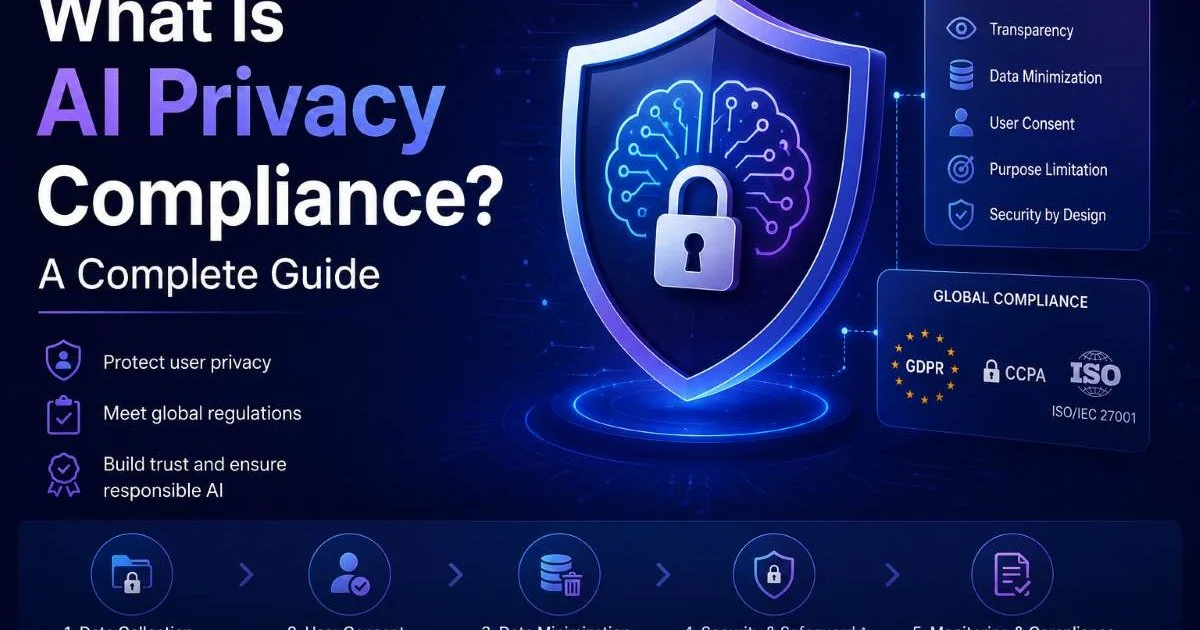
Begin by interviewing each department, from marketing and HR to IT and customer support, and catalog every system that touches personal data. Include third-party processors, cloud storage providers, analytics platforms, and even spreadsheets shared via email. As organizations increasingly integrate AI tools into their workflows, understanding how these systems handle personal data becomes critical. For a deeper look at how AI privacy compliance intersects with GDPR obligations, that foundational knowledge shapes how you approach every subsequent step.
Documenting Legal Basis
For each processing activity you identify, record the lawful basis under Article 6 of the GDPR. Whether it is consent, legitimate interest, contractual necessity, or legal obligation, that determination must be documented and defensible. Many organizations default to consent when legitimate interest would be more appropriate, or vice versa. Getting this wrong creates liability that no amount of cookie banners can fix.
Create a centralized register linking each processing activity to its legal basis, data categories, retention period, and responsible team member.
Your inventory should also capture data retention periods and deletion schedules. Supervisory authorities frequently flag organizations that collect data with no defined retention policy. A good practice is to assign a data steward within each business unit who validates the accuracy of their department's entries quarterly. This distributed ownership model scales far better than relying on a single DPO to know everything.
Step 2: Conduct a GDPR Compliance Audit
Audit Scope and Methodology
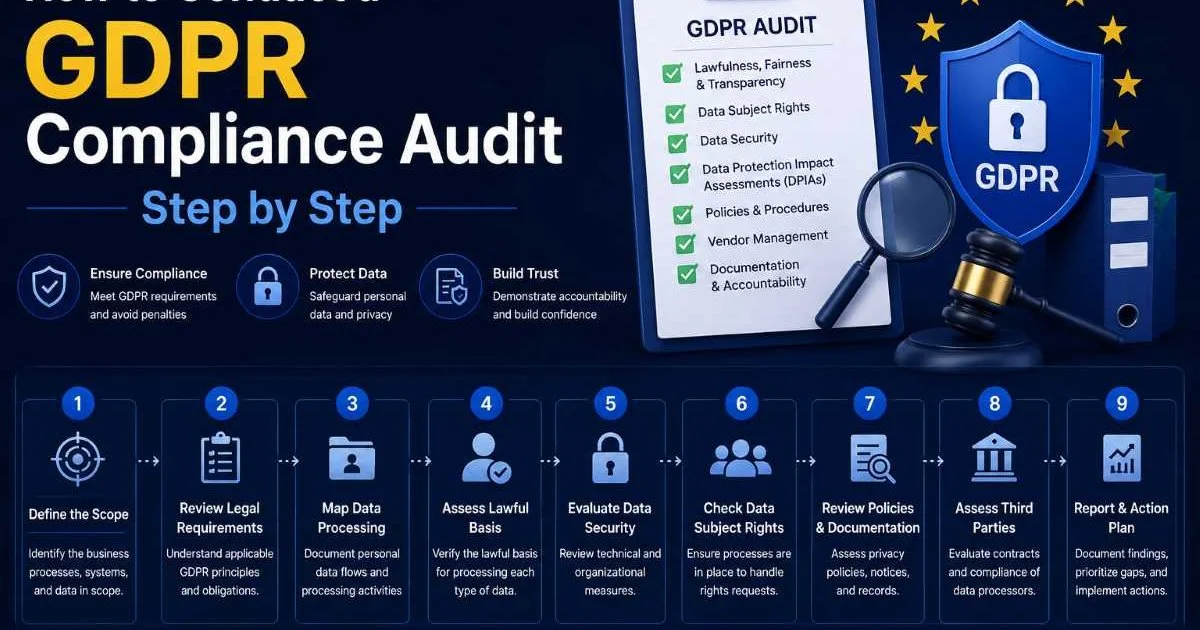
Once your data inventory is in place, the next step is a formal compliance audit. This is not a box-ticking exercise. A properly scoped audit examines your organization's technical measures, organizational policies, vendor contracts, and incident response capabilities against the specific requirements of the GDPR. If you need a structured approach, our guide on how to conduct a GDPR compliance audit step by step breaks the process down into manageable phases with clear deliverables at each stage.
Define your audit scope based on risk. High-volume processing activities, cross-border transfers, and special category data should receive the most attention. Use a combination of document review, staff interviews, and technical testing. For example, verify that your consent management platform actually blocks tracking scripts before consent is given, not just displays a banner. Test your subject access request workflow end to end, measuring how long it takes from receipt to fulfillment.
Common Audit Gaps
In my experience, the most common gaps uncovered during audits fall into three categories: incomplete data processing agreements with vendors, outdated privacy notices that do not reflect current processing activities, and missing or untested breach notification procedures. Each of these represents both a compliance risk and a potential fine trigger. Address them by priority, starting with gaps that affect the highest volume of data subjects.
Outdated data processing agreements with sub-processors are among the most frequently cited violations in supervisory authority decisions.
After completing the audit, produce a findings report with specific remediation actions, owners, and deadlines. Avoid vague recommendations like "improve data security." Instead, specify actions: "Implement AES-256 encryption at rest for the customer database by Q2 2024" or "Update the privacy notice to include the new marketing automation processor by March 15." Concrete deadlines create accountability; vague intentions do not.
Step 3: Perform Privacy Risk Assessments
Risk Scoring and Prioritization
A privacy risk assessment goes beyond the audit by evaluating the likelihood and severity of harm to data subjects from your processing activities. Article 35 of the GDPR mandates Data Protection Impact Assessments (DPIAs) for high-risk processing, but smart privacy teams extend risk assessment practices to all significant processing activities. Develop a scoring matrix that weighs factors such as data sensitivity, volume of subjects affected, cross-border transfer involvement, and the use of new technologies.
| Risk Factor | Low Risk | Medium Risk | High Risk |
|---|---|---|---|
| Data sensitivity | Non-sensitive personal data | Financial or behavioral data | Special category (health, biometric) |
| Volume of subjects | Under 1,000 | 1,000 to 100,000 | Over 100,000 |
| Cross-border transfers | Within EEA only | Adequacy decision countries | No adequacy decision |
| Technology type | Standard databases | Cloud-based SaaS | AI/ML or automated decisions |
| Retention period | Under 1 year | 1 to 5 years | Over 5 years or indefinite |
Score each processing activity against these factors and rank them. Activities scoring in the high-risk tier require a full DPIA, while medium-risk activities should have documented mitigation measures. Low-risk activities still need to appear in your records of processing, but they demand proportionally less attention. This tiered approach prevents your team from drowning in assessments while still meeting regulatory expectations. Revisit scores quarterly as processing activities evolve.
AI Systems and Elevated Risk
AI-powered systems present unique privacy challenges that deserve focused attention in your risk assessment process. Automated decision-making, profiling, and large-scale data processing all trigger DPIA requirements. If your organization uses language models or other AI tools that process personal data, you should explore our detailed privacy risk assessment for AI systems guide for specific evaluation criteria. Additionally, selecting LLMs with strong privacy features can reduce your risk profile from the start.
The European Data Protection Board has issued specific guidance stating that AI systems processing personal data almost always require a DPIA under Article 35.
Document every mitigation measure you implement, including technical controls like pseudonymization and access restrictions, as well as organizational measures like staff training and vendor oversight. Your documentation should be detailed enough that a supervisory authority reviewing it can understand both the risk you identified and the specific steps you took to address it. This documentation forms the backbone of your accountability obligations under Article 5(2).
"Privacy risk assessments are not paperwork exercises; they are the mechanism that translates legal requirements into engineering and business decisions."
Step 4: Implement Ongoing Monitoring and Accountability
Tracking Fines and Enforcement Trends
GDPR compliance is not a project with a finish line. It is an ongoing operational function. Your checklist should include recurring activities: quarterly data inventory reviews, annual audits, regular privacy training for staff, and continuous monitoring of regulatory developments. Understanding GDPR fines and the penalties you need to know about helps you communicate risk to leadership in financial terms they understand. When a board member sees that Meta was fined €1.2 billion in 2023, the budget conversation around privacy tooling gets much easier.
Set up alerts for enforcement decisions from your relevant supervisory authority. Track which violations are being penalized most heavily and compare those against your own audit findings. If your authority is focused on cookie compliance this quarter, and your consent management platform has known issues, that should move to the top of your remediation queue. Reactive compliance is expensive; proactive monitoring is far cheaper.
Building a Culture of Compliance
Sustainability in GDPR compliance depends on embedding privacy awareness into your organizational culture. Run tabletop exercises simulating data breaches at least twice a year. Require all new hires to complete privacy training within their first two weeks. Create a simple internal channel where employees can flag potential privacy concerns without bureaucratic friction. These operational habits matter far more than any single policy document.
Maintain a live GDPR compliance dashboard visible to leadership that tracks open remediation items, upcoming audit dates, and key metrics like subject access request response times.
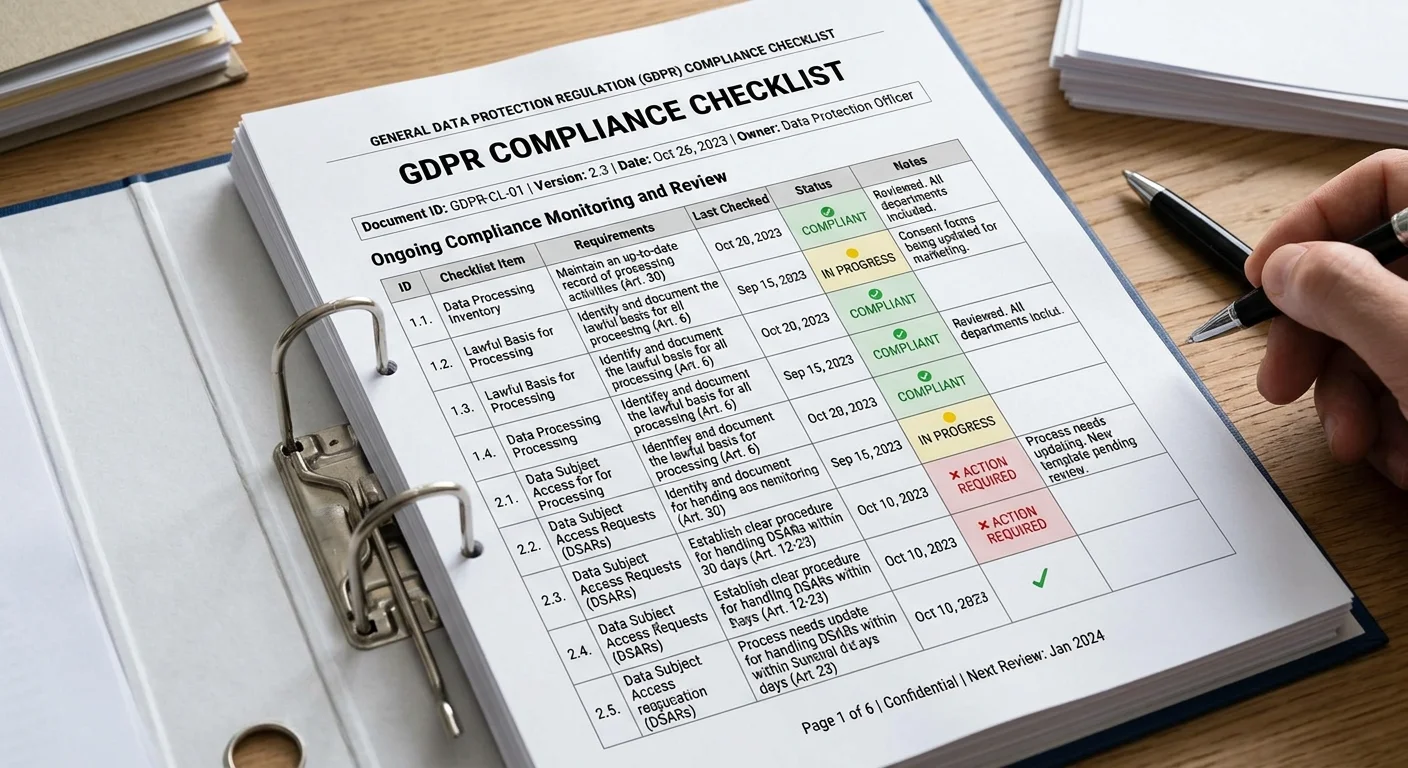
Finally, keep your GDPR checklist itself under version control. As regulations evolve, new guidance is issued, and your processing activities change, the checklist must be updated. Assign a quarterly review cycle where your privacy team validates each item against current requirements. Date-stamp every revision. When a supervisory authority asks to see evidence of your compliance program, a well-maintained, versioned checklist with supporting documentation tells a compelling story of accountability.
Frequently Asked Questions
?How often should we schedule GDPR privacy risk assessments?
?When should we use legitimate interest instead of consent as legal basis?
?How long does building a full data processing inventory realistically take?
?Is relying on a single DPO to maintain the GDPR checklist a red flag?
Final Thoughts
A comprehensive GDPR checklist is more than a compliance artifact. It is the operational backbone that keeps your privacy team aligned, your risks visible, and your organization defensible.
Start with data mapping, audit rigorously, assess risks with a structured methodology, and build monitoring into your daily operations. The organizations that treat privacy as a continuous practice, rather than a one-time project, are the ones that avoid the headlines and the fines. Your 2024 checklist should be a living document that grows with your organization.
Disclaimer: Portions of this content may have been generated using AI tools to enhance clarity and brevity. While reviewed by a human, independent verification is encouraged.